E‑Invoice and E‑Archive in Turkey: A Concise Compliance Guide for SMEs
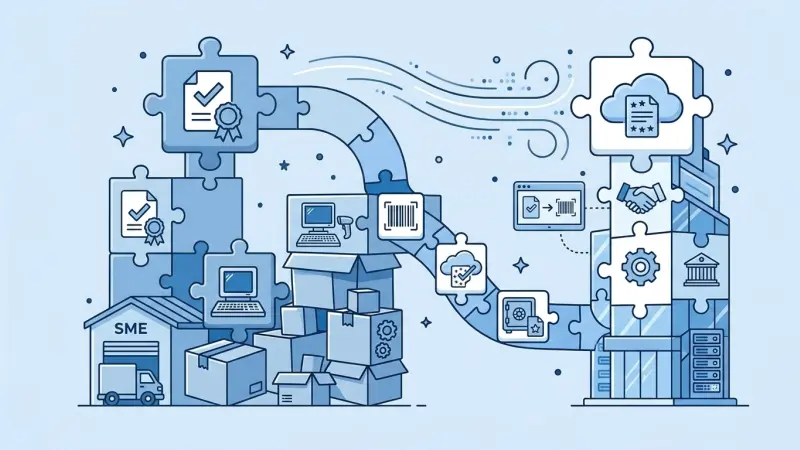
Quick answer: E‑invoice and e‑archive programs aim to replace paper/PDF flows with standardized digital documents and retention. For SMEs the win is aligning billing with ERP and accounting to kill re-keying. This article is planning-focused, not legal advice.
For finance owners and ops/IT coordinators working on rollout checklists.
Three process pillars
- Issuance: Generate and deliver invoices after goods/services.
- Retention & retrieval: Meet storage rules with auditable access.
- Accounting alignment: VAT/withholding and chart-of-accounts mapping.
ERP integration checkpoints
- Master data parity: Invoice line SKUs must map 1:1 to item masters.
- UoM and discount integrity: Quote-to-invoice must preserve pricing rules.
- Returns chain: Stock returns and fiscal corrections should trace one event.
- Single reporting source: Sales, collections, and VAT summaries should not be re-aggregated in spreadsheets.
Common SME mistake
Issuing invoices outside the ERP and posting only totals starves you of product profitability and inventory truth. Aim to meet documents and operational movements in one system.
High-level roadmap
- Clean customer and product masters.
- Standardize price lists and tax codes.
- Pilot a branch or product line before full cutover.
- Run a 30-day variance checklist post go-live.
Takeaway: Compliance is not only file format—it is speaking the same data language as your ERP. Plan integration early to avoid painful year-end fixes.