CRM Software Selection: 7 Criteria for Your Sales Pipeline
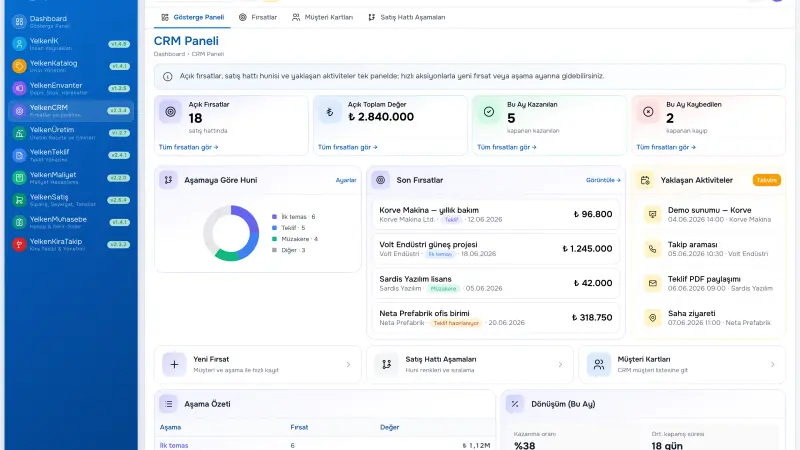
Sales leaders adopt CRM to get pipeline visibility, yet many SMEs still run deals on spreadsheets and chat. The right CRM software is not a contact database—it is the operating system for opportunities, activities, and handoffs to quoting and fulfillment.
Short answer: Choose CRM by how well it models your B2B sales pipeline, ties every call and meeting to an opportunity, shares customer context with proposal and order modules, and respects workspace-level permissions—not by how many generic automation widgets it advertises.
Why CRM fails without process design
CRM projects fail when teams are asked to log everything but nobody reviews the pipeline weekly. Before comparing vendors, document stages: inquiry, qualified, proposal sent, negotiation, won, lost. Assign exit criteria—for example, “proposal sent” requires a linked quote number and expected close date.
When CRM sits beside ERP in silos, sellers retype account names and amounts. Integrated modular stacks keep the customer card, opportunities, quotes, and orders aligned so forecast and fulfillment tell one story.
What a B2B-ready pipeline looks like
- Stages match how your team actually sells, not a generic SaaS template
- Weighted forecast uses stage probability you control and review quarterly
- Activities (calls, visits, tasks) roll up to opportunity and account
- Lost reasons are structured for review, not free text only
- Handoff to proposal software is one click, not export
Seven criteria for CRM selection
1. Customer record depth
Can you store multiple contacts, roles, payment terms, and delivery addresses? B2B deals involve committees; a single contact name field is not enough for procurement, technical, and finance stakeholders.
2. Pipeline flexibility
Can you add stages, reorder them, and require fields per stage without developer tickets? Seasonal businesses often need a separate pipeline for projects versus repeat stock orders.
3. Activity discipline
Are next steps visible on dashboards? Can managers see stale opportunities without custom reports? Activity metrics should drive coaching, not surveillance.
4. Quote and order linkage
When a quote is accepted, does the opportunity close automatically and reference the order ID? Broken handoffs here destroy trust in CRM data.
5. Permissions and workspaces
For multi-branch firms, can users see only their branch customers while leadership sees group rollups? Workspace isolation prevents accidental data leaks between units.
6. Reporting without a data warehouse
Standard views: conversion by stage, average cycle length, activity per rep, top lost reasons. Export to spreadsheet should be exception, not daily ritual.
7. Modular ERP fit
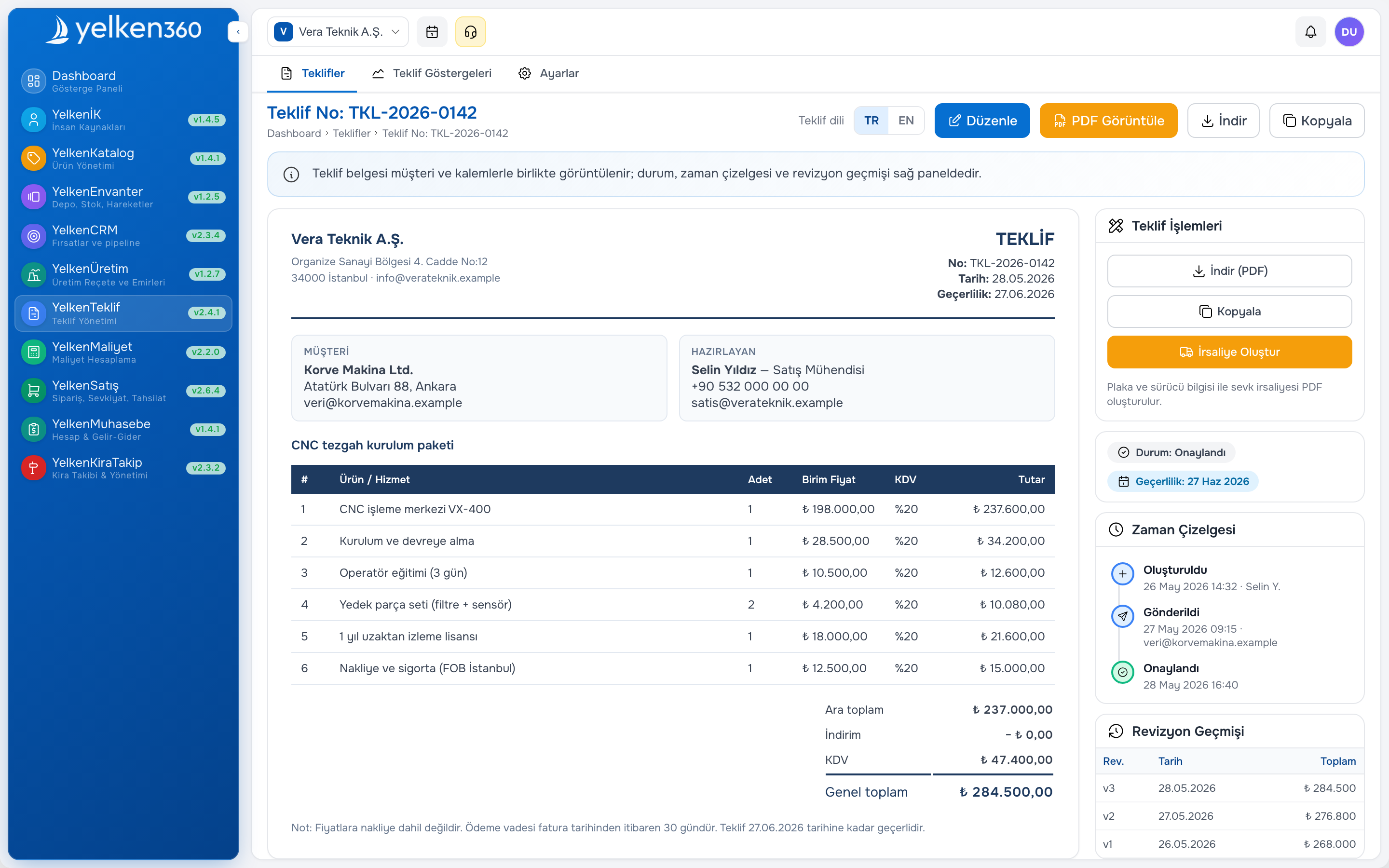
CRM should activate alongside or before proposal modules. Explore the Yelken CRM package within Yelken360 modules and compare pricing tiers for your team size.
Common CRM mistakes
- Buying CRM that marketing owns while sales keeps Excel for “real” numbers
- Too many mandatory fields—reps stop logging or enter junk
- No weekly pipeline review ritual with decisions on stale deals
- Ignoring mobile needs for field sales and site visits
- Choosing enterprise CRM priced and complex for teams of five hundred
Linking CRM to revenue operations
CRM value peaks when it feeds cash collection. An opportunity marked won should trigger order creation, stock reservation rules, and accounts-receivable expectations. If finance still learns about deals from email, your CRM is a diary, not a system.
Distributors need inventory signals on the opportunity card before promising dates. Service firms may emphasize project tasks and billing milestones instead of SKU counts.
Building a forecast leadership trusts
Forecast meetings fail when reps inflate numbers to please managers or sandbag to beat quota. CRM should show stage history: when a deal entered negotiation, how often it slipped, and which quotes are still unsigned. Leaders coach on evidence, not anecdotes.
Separate committed forecast from upside. Committed includes only stages with signed proposal or verbal yes documented with next step. Upside holds early-stage opportunities reviewed but not promised to the board.
Implementation checklist
- Define stages and probabilities with sales leadership and finance
- Import accounts; deduplicate tax IDs and legal names
- Migrate open opportunities only—archive ancient leads
- Train on next-step discipline, not data entry theory
- Run a four-week pipeline stand-up every Monday with clear actions
Yelken360 as modular CRM
Yelken360 keeps CRM in the same workspace as catalog, quotes, and optional stock. Permissions are workspace-scoped; plans control which modules are active. That lets a twenty-person trader start with CRM plus proposal, then add inventory software when SKU count justifies it.
Questions about fitting your pipeline? Use contact for a scoped demo or browse the CRM solution page for capability alignment.
Frequently asked questions
Do small teams really need CRM?
If more than two people touch accounts or you cannot answer what is in the pipeline this month in under five minutes, yes. One lost renewal from poor follow-up often exceeds subscription cost.
Should marketing automation be in the same tool?
SME B2B often needs sales CRM first. Marketing automation can come later unless you run high-volume inbound lead flows that require nurture tracks.
How is CRM different from ERP?
CRM optimizes revenue activities; ERP executes stock, orders, production, and finance. Modular ERP bundles both without duplicate customer masters.
Can we migrate from spreadsheets?
Start with accounts and open deals only. Historical call logs rarely justify bulk import and clutter active pipeline views.
What metrics matter in month one?
Percentage of opportunities with a next activity dated, stage aging beyond threshold, and quotes sent per active opportunity. Avoid vanity metrics like total contacts created.
Should we integrate email automatically?
Email sync helps history but can clutter records. Many B2B teams log key emails manually and rely on structured activities for tasks—choose based on rep discipline, not feature count.