Pipeline and Opportunity Management for SME Sales Teams
Sales leaders adopt CRM for pipeline visibility, yet many SMEs still run deals on spreadsheets and chat threads. Effective pipeline and opportunity management is not a contact database—it is how you define stages, log activities, forecast honestly, and hand off to quoting and fulfillment without retyping data.
Short answer: Pipeline management models your sales stages and probabilities; opportunity management tracks each deal’s value, owner, activities, and expected close; together on a B2B CRM they give SME sales teams funnel visibility and clean handoffs to proposal and order modules.
Why CRM projects fail without process design
CRM fails when teams must log everything but nobody reviews the pipeline weekly. Before comparing vendors, document stages: inquiry, qualified, proposal sent, negotiation, won, lost. Assign exit criteria—for example, “proposal sent” requires a linked quote number and expected close date.
When CRM sits beside ERP in silos, sellers retype account names and amounts. Integrated modular stacks keep the customer card, opportunities, quotes, and orders aligned so forecast and fulfillment tell one story.
What a B2B-ready sales pipeline looks like
- Stages match how your team actually sells, not a generic SaaS template
- Weighted forecast uses stage probabilities you control and review quarterly
- Activities (calls, visits, tasks) roll up to opportunity and account
- Lost reasons are structured for review, not free text only
- Handoff to proposal software is one click, not export
Pipeline management for SME sales teams
Pipeline management answers: how much is in each stage, how long deals stay there, and where they stall. SME sales pipelines should stay simple—often five to seven stages cover most B2B motions. Adding stages without discipline creates “pipeline inflation” where deals sit in early stages to look healthy.
Review cadence matters more than software brand. A weekly fifteen-minute pipeline meeting with rules (stale deal definition, required next activity) beats a complex CRM nobody opens.
Example stage definitions
- Inquiry: Lead captured; not yet qualified
- Qualified: Budget, need, and timeline confirmed
- Proposal: Quote sent; link or PDF on record
- Negotiation: Pricing or terms under discussion
- Won / Lost: Closed with order reference or lost reason
Opportunity management in practice
An opportunity is one pursuable deal: expected revenue, close date, owner, and linked quotes or orders. Opportunity management includes:
- Splitting opportunities by product line or branch when needed
- Linking multiple contacts (technical, procurement, finance)
- Logging calls and meetings against the opportunity, not only the account
- Updating forecast when quoted value or close date changes
- Closing lost deals promptly so forecast stays honest
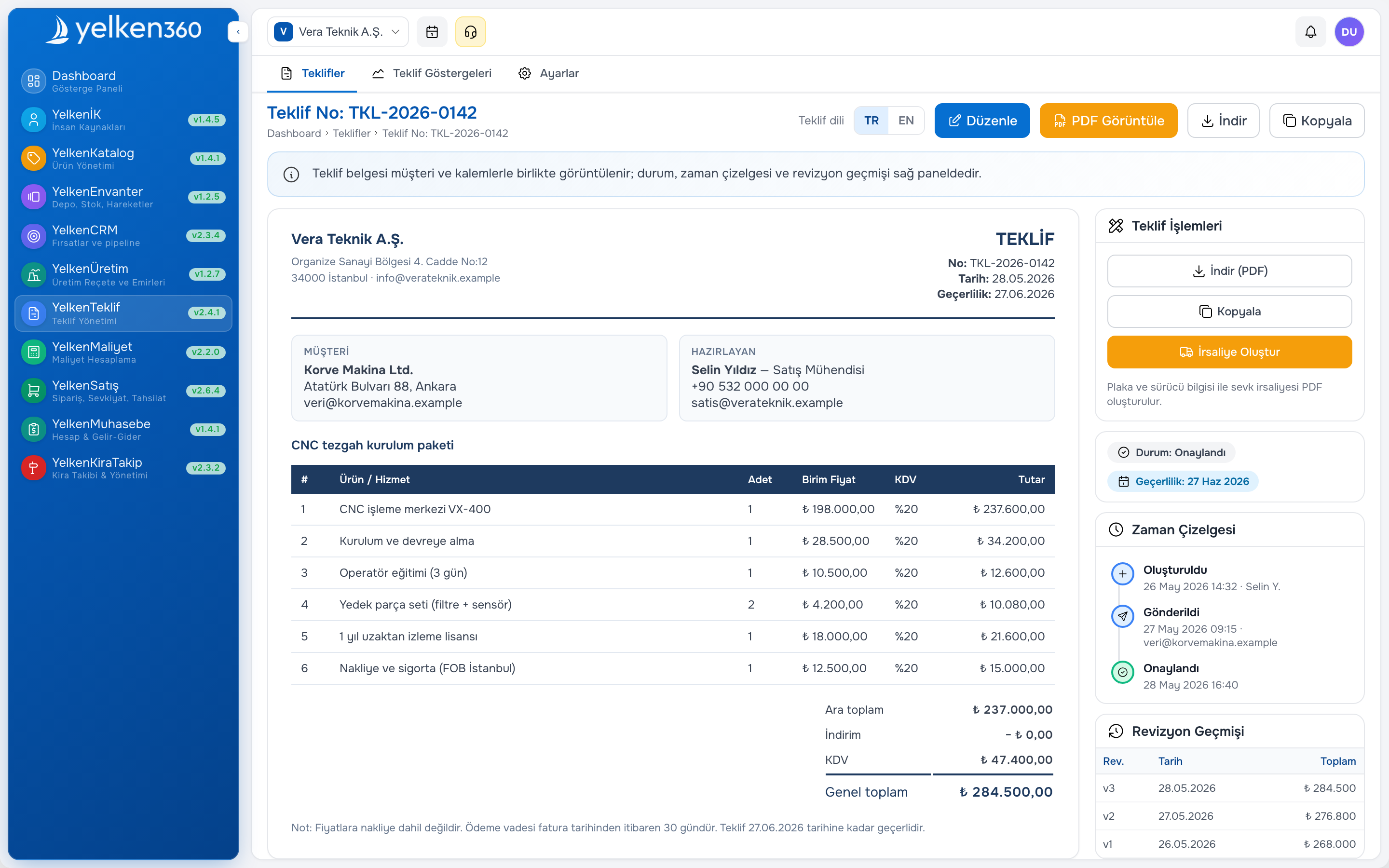
For teams that quote heavily, opportunity records should open Yelken Proposal quotes with customer data prefilled—core to CRM quote integration.
Seven criteria for SME CRM selection
1. Customer record depth
Store multiple contacts, roles, payment terms, and delivery addresses. B2B deals involve committees; a single contact field is not enough.
2. Pipeline flexibility
Add stages, reorder them, and require fields per stage without developer tickets. Seasonal businesses may need separate pipelines for projects versus repeat stock orders.
3. Activity discipline
Next steps visible on dashboards; managers see stale opportunities without custom reports. Metrics should drive coaching, not surveillance.
4. Quote and order linkage
When a quote is accepted, the opportunity should close or advance with order reference. Broken handoffs destroy trust in CRM data.
5. Permissions and workspaces
Multi-branch firms need branch-scoped customers with group rollups for leadership. Workspace isolation prevents accidental cross-unit data exposure.
6. Reporting without a data warehouse
Win rate, cycle length, and activity volume by rep should be available natively. Export only for ad-hoc analysis.
7. Modular growth
Start CRM; add proposal, inventory, or accounting as process matures. Review CRM software in context of modules and pricing.
Metrics that matter for SMEs
- Conversion rate between stages (your own history as baseline)
- Average days in proposal and negotiation
- Forecast accuracy: quoted value versus closed order value
- Activity count per won deal (quality over raw volume)
- Lost reason distribution by competitor or price
Example scenario: if deals average twenty-one days in “proposal sent” before win or loss, investigate template clarity, online quote tracking, or pricing approval delays—not only seller effort.
Connecting CRM to proposals and operations
Opportunities should not stay open after order creation. Lost deals should not have active orders. Integrated CRM software with proposal and sales modules keeps leadership reviews credible.
Customer statistics on unified cards (quotes, orders, activities) reduce tab switching during account reviews. Manufacturing or distribution SMEs may combine CRM with sector pages such as manufacturing production when production lead times affect close dates.
Yelken360 CRM for growing B2B teams
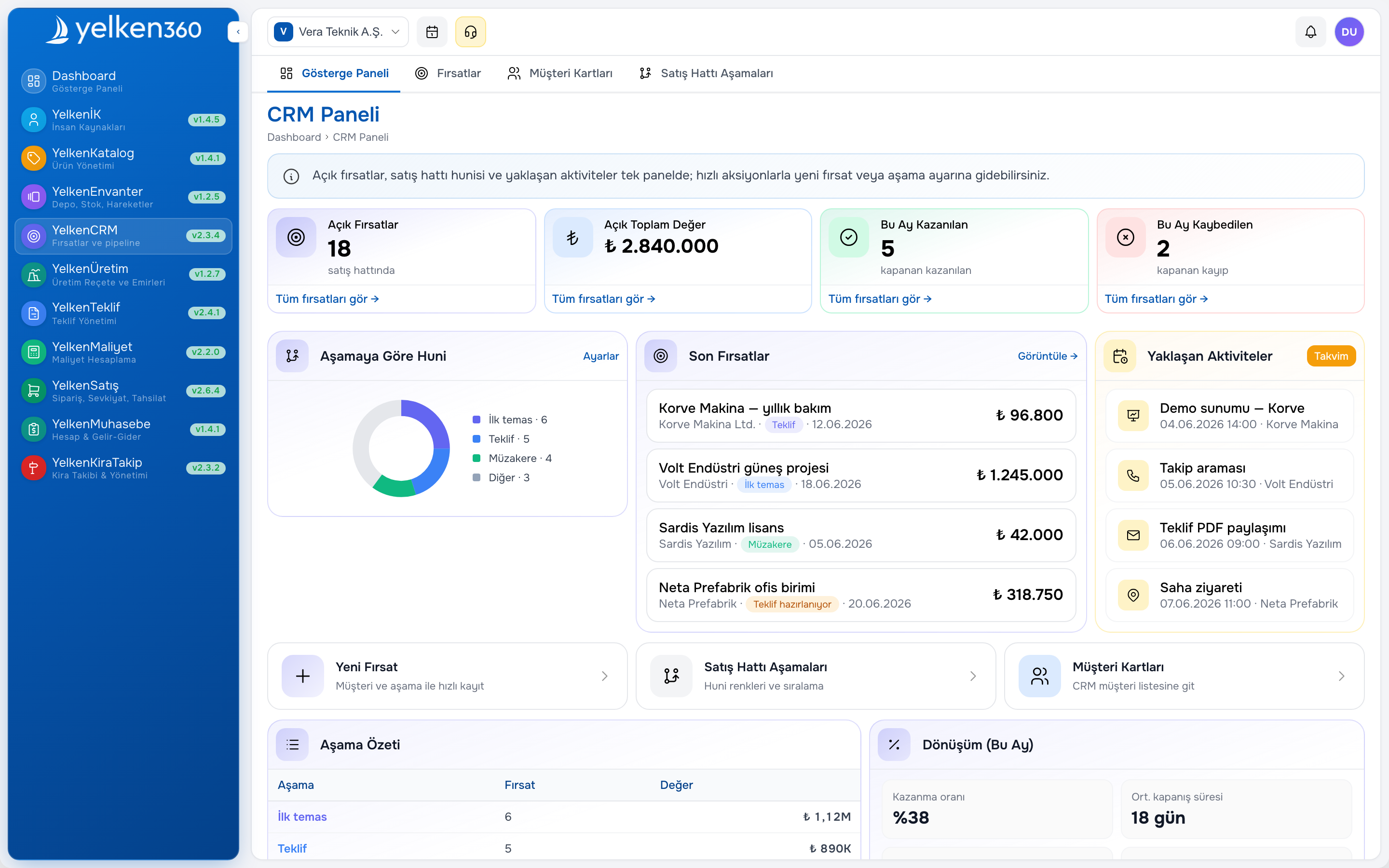
The Yelken CRM module supports pipeline stages, opportunities, activities, and customer cards scoped per workspace. Pair with proposal when quoting is central to your motion.
Questions about fitting your pipeline? Use contact for a scoped demo or browse the CRM solution page for capability alignment.
Frequently asked questions
What is the difference between pipeline and opportunity?
Pipeline is the staged funnel view across many deals; an opportunity is one deal moving through those stages with its own value and dates.
How many pipeline stages should an SME use?
Usually five to seven. More stages rarely help unless you have distinct sales motions (e.g. projects versus replenishment) that need separate pipelines.
Do we need CRM if we only have five salespeople?
Small teams benefit when deals are complex, multi-contact, or quote-heavy. Very simple repeat orders may start with quote software and add CRM when visibility breaks down.
How does opportunity management tie to forecasting?
Forecast uses stage probability times opportunity value. Keep values tied to latest accepted or sent quote amounts, not gut feel, for cleaner reviews.
Can CRM work without integrated quotes?
Yes initially, but double entry and stale amounts follow. Integrated CRM quotes are the usual next step for B2B SMEs scaling past spreadsheets.