SME ERP Selection: Criteria for Growing Businesses

Choosing SME ERP is less about buying the biggest suite and more about matching how you actually sell, stock, and collect cash today—while leaving room for branches, production, or rental lines tomorrow. A practical selection ties modules to measurable pain: quote errors, stock disputes, slow collections, or unknown product margin.
Short answer: SME ERP selection means defining your primary motion (trade, make, rent, or project), listing must-have processes per department, scoring vendors on modular fit and workspace isolation, then phasing go-live so master data and one critical workflow (quotes or stock) stabilize before you add manufacturing or costing.
Why ERP selection fails for growing businesses
Teams often buy on brand recognition or a demo that looks polished but does not reflect their SKU model, approval rules, or branch structure. Six months later, sales still emails PDF quotes because the proposal module was never configured, or warehouse runs a parallel spreadsheet because inventory felt “too heavy” on day one.
Another trap is treating ERP as accounting-only. For B2B SMEs, revenue quality depends on catalog discipline, quote-to-order integrity, and stock truth as much as on the general ledger. Finance visibility without operational linkage recreates the Friday afternoon “what is really in the pipeline?” meeting.
Signals you are ready for ERP—not just more Excel
- Three or more people maintain overlapping price or stock files
- Quote versions and shipped quantities regularly disagree
- Leadership cannot get branch-level stock or sales without manual consolidation
- Key customers ask for audit trails you cannot produce from email
- You plan a second warehouse, brand, or country within eighteen months
Map your business motion first
Before feature matrices, label your dominant motion. Distributors and traders need catalog, proposal software, optional inventory and warehouse software, and sales order management. Light manufacturers add manufacturing and BOM when recipes and production orders matter. Rental or equipment-heavy firms need contract periods, returns, and utilization reporting—not only standard sales lines.
Project or engineer-to-order teams prioritize CRM pipeline, milestone billing, and BOM revisions tied to customer orders. Writing this paragraph honestly prevents paying for factory modules you will not use for two years.
Module criteria that matter for SMEs
Use a simple scorecard (1–5) per vendor. Weight criteria by your top pain, not by marketing breadth.
Core evaluation dimensions
- Master data: Single product and customer core feeding quotes, orders, and stock
- Modular activation: Enable packages per workspace without re-implementing the whole suite
- Permissions: Workspace-scoped roles; no accidental cross-branch data leaks
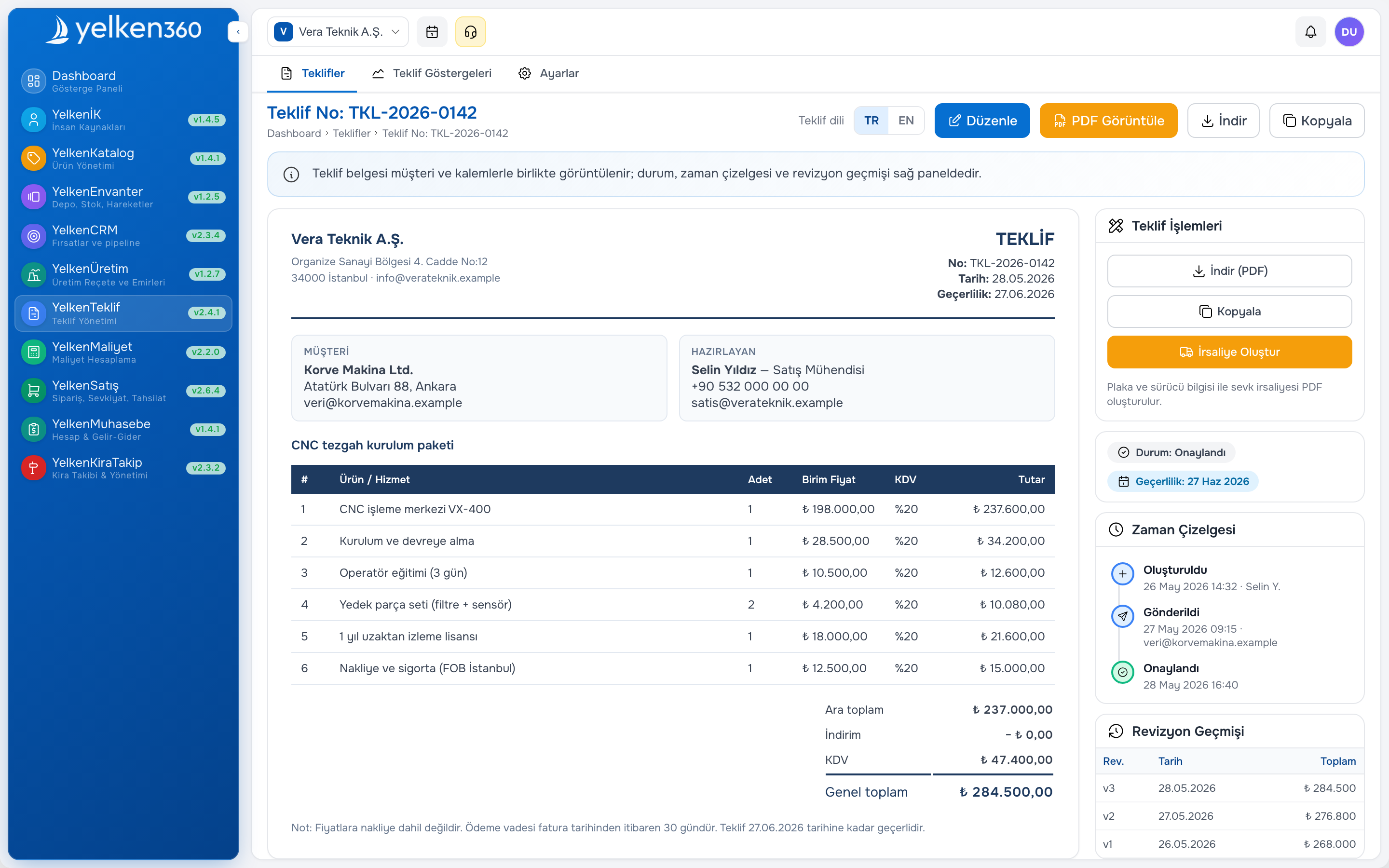
- Quote governance: Discount floors, approvals, online acceptance, revision history
- Inventory truth: Document-driven receipts, issues, transfers, and counts
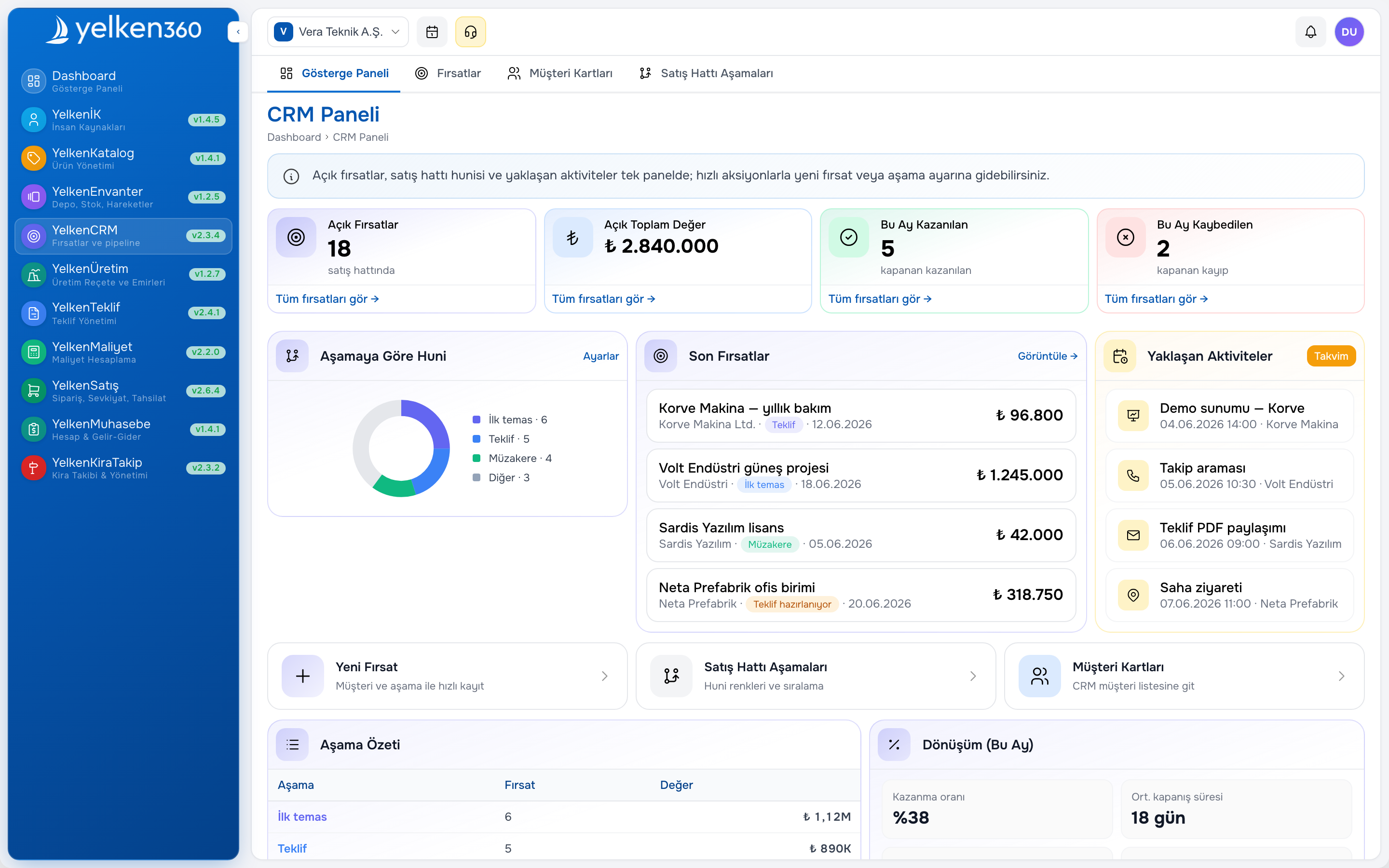
- CRM alignment: Opportunities linked to quotes—see CRM software fit
- Cash visibility: Pre-accounting or GL that sees operational documents
- Implementation load: Realistic weeks to first value, not eighteen-month programs
Build a phased roadmap
Successful SME ERP programs phase value. Phase 1: product catalog and customers; freeze legacy lists. Phase 2: quotes with templates and approval rules. Phase 3: stock movements and ATP for sales. Phase 4: orders, shipments, and AR summary. Phase 5: production or costing when margin disputes prove the need.
Assign one data owner per domain. Running dual systems without cutover rules brings back the chaos ERP was meant to remove. If you still rely on spreadsheets for analysis, keep them as export targets—not as the ledger.
What to measure after each phase
- Hours from quote draft to customer send
- Order lines fulfilled with wrong SKU or price (target: near zero)
- Stock count variance as a percentage of active SKUs
- Days to answer “available to promise” without phone calls
- Forecast accuracy when CRM stages match real orders
Total cost beyond subscription
License fees are one line. Add data cleanup, template design, training hours, and advisor time for tax mapping. Cloud ERP reduces server and backup burden; it does not remove change management. Compare three-year cost including error reduction: expedited freight, credit notes, and lost deals from stock lies often exceed software fees for mid-size B2B firms.
Review pricing with branch count, user seats, and entity limits (products, proposals) in mind. Modular platforms let a holding company run different packages per workspace when subsidiaries differ.
Vendor questions to ask in demos
- Can we go live with proposal and catalog only, then add inventory next quarter?
- How are quote revisions audited when price changes after send?
- Does stock reservation follow our rule (at quote vs at order)?
- Can branch managers see only their warehouse while HQ sees group ATP?
- What export paths exist for our accountant without rebuilding books in Excel?
- How are limits enforced when we approach plan caps—hard stop or warning?
Common selection mistakes
- Buying manufacturing because you might assemble someday, while quotes still live in email
- Ignoring mobile and online buyer experience for customer-facing approvals
- Choosing ERP that cannot scope data per brand or branch workspace
- Skipping data migration standards (SKU format, units, tax categories)
- Letting IT own selection without operations sign-off on workflows
Where Yelken360 fits
Yelken360 is modular cloud ERP with workspace isolation: enable Yelken Product, Yelken Proposal, Yelken CRM, Yelken Inventory, and other packages as each workspace’s subscription allows. Compare packages on the modules page and align limits on pricing. For a selection workshop scoped to your motion, use contact.
Frequently asked questions
How is SME ERP different from enterprise ERP?
Enterprise suites assume large IT teams, long implementations, and broad HR and plant modules on day one. SME ERP emphasizes faster phases, fewer mandatory modules, and owner-operators who need cash and stock clarity without a full COA on week one.
Should we replace Excel completely?
No. Keep Excel for scenarios and advisor exports. Replace Excel as the system of record for products, stock movements, quotes, and customer balances.
Cloud or on-premise for a 30-person company?
Most growing SMEs choose cloud for uptime, backups, and remote access. On-premise can make sense with strict data residency and in-house infrastructure—compare five-year ops cost honestly.
How long until first value?
With clean product data and two quote templates, many teams send the first live quote from ERP in two to four weeks. Inventory and manufacturing add parallel workstreams—phase them.
One ERP for all branches or separate systems?
Prefer one platform with workspace or branch scoping so catalog and customer keys stay consistent. Separate databases multiply integration cost and break group reporting.