Cash Flow Control with Pre-Accounting Software
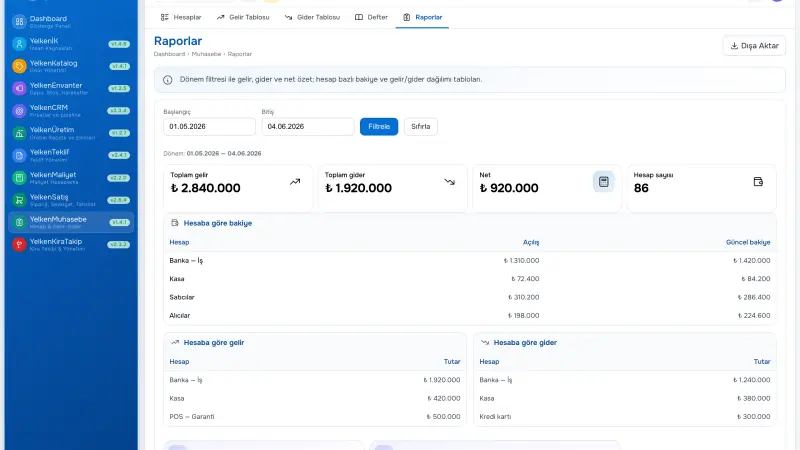
Cash flow surprises kill growing SMEs faster than slow sales—often because collections, payables, and daily expenses sit in separate notebooks and files. Pre-accounting and accounting software in ERP gives leadership a live picture of liquidity without waiting for month-end closes.
Short answer: Pre-accounting software tracks cash and bank movements, income and expense categories, and customer or supplier balances in one workspace—bridging operational sales data to finance visibility before full general-ledger complexity is required.
Pre-accounting versus full GL
Many KOBİ-scale firms need strong cash and AR control before they run full chart-of-accounts with every accrual. Pre-accounting covers registers, categorization, customer statements, and simple P&L views. Full accounting adds statutory books, tax mappings, and auditor exports—often phased later with an external accountant.
Start where pain is highest: unknown cash position Friday afternoon, disputed customer balances, or expenses charged to wrong cost centers.
What to track from day one
- Cash and bank accounts with daily balance
- Income and expense types aligned to management reporting
- Customer AR summary tied to invoices or collections
- Supplier AP if purchase volume is significant
- Simple cash forecast from open orders and due payables
Connecting sales to cash
When quotes and orders live in ERP, expected inflows are visible earlier. Accepted deals should inform collection plans; shipped orders should drive invoice timing. Without linkage, finance chases sales for “what is really coming” while sales assumes finance sees the same pipeline.
Pair accounting with sales order management and proposal software so amounts on orders match what was quoted and approved.
Cash flow control habits
Software enables discipline; rituals sustain it. Weekly cash review: opening balance, expected receipts, committed payments, minimum buffer. Monthly: compare forecast to actual and adjust payment terms with slow payers.
Warning indicators to dashboard
- Days sales outstanding trending up
- Concentration of AR in top three customers
- Expenses growing faster than gross margin
- Negative cash weeks in seasonal businesses
- Unreconciled bank lines older than seven days
Excel versus centralized finance view
Spreadsheet cash trackers break when multiple people edit or when bank CSV imports are manual. Central registers with audit trail reduce “forgotten” expenses and duplicate customer credits. Export to Excel remains valuable for advisor review—not as the ledger.
Workspace and permissions
Owners may see all accounts; branch managers see local cash boxes. Modular ERP scopes data per workspace so a holding company’s brands do not mix balances. Review Yelken Accounting on the modules catalog.
Working capital levers owners control
Payment terms are a financing tool. Extending customer net days without matching supplier terms drains cash. Review top ten customers by AR balance quarterly—negotiate deposits on custom orders, early-pay discounts where margin allows, and stop shipping when credit limits hit.
Expense approval thresholds matter as much as revenue. Centralize recurring subscriptions; challenge duplicate tools sales bought independently. Pre-accounting categories should mirror management P&L lines your board already discusses.
Tax and advisor collaboration
Export general ledger summaries or categorized cash books your advisor requests on schedule. Avoid giving accountants seventeen Excel tabs—one ERP export saves rework and late filing stress.
Scenario planning for seasonal SMEs
Retailers and agricultural suppliers swing cash by season. Build a simple thirteen-week cash view: optimistic and conservative receipt scenarios, fixed payroll, flexible marketing. Update assumptions when pipeline changes—CRM plus order backlog feeds the receipt side when integrated.
Banks and investors ask for clarity; a consistent export from ERP beats reconstructed Excel before every meeting.
Implementation without overwhelming finance
- Open bank and cash accounts with start balances
- Define twenty to thirty categories management actually uses
- Import customer balances from last statement
- Connect order or invoice sources if modules are live
- Reconcile weekly; close month with advisor checklist
Supplier payments and AP discipline
Payables visibility prevents duplicate payments and missed early-pay discounts. Match purchase receipts to supplier invoices where purchasing volume warrants it. Even without full AP automation, schedule weekly payment runs from one cash view instead of reacting to every supplier call ad hoc.
Negotiate terms when growth strains cash—suppliers often prefer predictable dates over chaotic rush payments.
Yelken360 finance modules
Yelken360 lets you add accounting when sales and stock modules justify integrated numbers. See pricing for workspace plans. Need rollout help? Contact the team.
Frequently asked questions
Is this a replacement for our external accountant?
No. It organizes operational finance data your accountant can use for statutory reporting and tax.
Can we run accounting only without inventory?
Yes for service-heavy firms; trading firms benefit from linking stock cost to margin reports when ready.
How do multi-currency sales affect cash view?
Define display currency per workspace and track FX on bank accounts; policy should match how you invoice export buyers.
What about e-invoice regulations?
Regulatory connectors vary by country; ERP should not block your compliance stack—plan integration with local providers.
Dashboards owners actually open
Keep executive views to five numbers: cash this week, AR over thirty days, AP due, gross margin trend, and largest customer concentration. Drill-down links go to ERP detail; avoid rebuilding charts in Excel each Monday.
When should we add inventory costing?
When SKU margin disputes appear—pair inventory software with accounting for moving-average or chosen method.
How often should owners review cash?
Weekly for active businesses; daily in tight seasons. Fifteen minutes with one ERP screen beats hours reconstructing balances from bank SMS and spreadsheets.
Finance visibility is a leadership habit: modular pre-accounting in Yelken360 gives you the register; discipline on categorization and collection gives you the outcome. Start with one bank account and ten categories if overwhelmed—expand after two clean reconciliation weeks.