Product Costing and Rental Tracking Reports: Module Guide
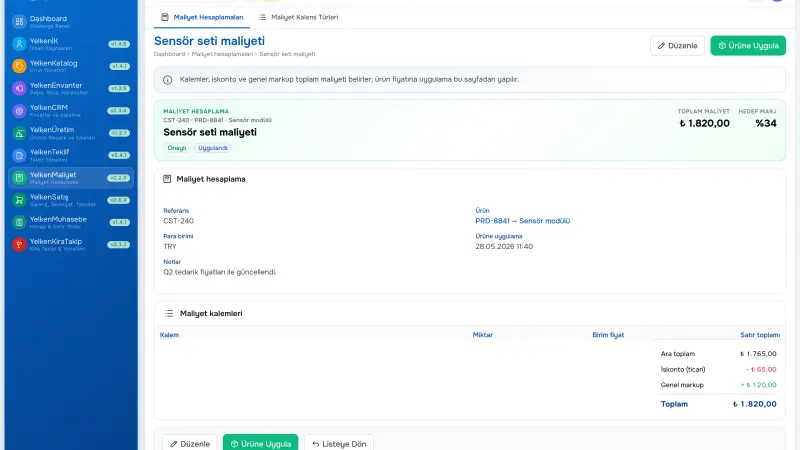
Quoting from gut feel works until material prices move, labor buckets shift, or rental fleets sit idle while finance rebuilds margin in Excel. Product costing and rental tracking reports in ERP give operations and leadership the same numbers—standard or scenario costs for catalog pricing, and utilization summaries for hire businesses—without disconnected files.
Short answer: Product costing modules roll material, labor, and overhead into unit or batch costs for price decisions; rental modules track contracts, issues, returns, and billing periods with summary reports and transaction history—both should share customers, products, and workspace permissions with quoting and inventory.
Why costing belongs inside ERP
When cost lives only in finance spreadsheets, sales underquotes, purchasing overreacts to spot prices, and month-end surprises appear as “margin erosion.” Central costing tied to product catalog and inventory uses the same SKU, unit, and BOM explosions manufacturing already posts.
For distributors, rolled purchase cost plus landed factors may be enough. For manufacturers, BOM line costs and known labor rates per operation bucket feed standard prices. Update scenarios when steel, resin, or freight indexes shift—then push approved list prices through governance in proposal software.
Costing inputs to model explicitly
- Material from BOM or last purchase with agreed method
- Labor or machine hours per unit or batch
- Overhead allocation rules (fixed per hour or percent of material)
- Scrap and yield on critical components
- Currency or freight surcharges when importing components
Product cost calculation workflows
A practical costing workflow: build a calculation for a finished SKU, attach lines (components, services, overhead), review rolled total, compare to target margin, approve list or floor price. Version calculations when engineering releases a new BOM revision.
Scenario mode helps leadership ask “what if resin rises eight percent?” without corrupting the approved standard. Only published scenarios should flow to quote floors—drafts stay visible to finance and product managers.
Connecting costing to quotes and orders
Proposal lines should respect floor margin from active cost sheets. Discount approvals escalate when sales go below floor—not only when they go below list. Orders accepted below floor should be rare and audited; if they happen often, your standard costs are stale or your market positioning changed.
Pair costing with manufacturing and BOM when make items dominate revenue. Light traders may start with purchase-based rolling averages before full calculation sheets.
Operating cost and management reporting
Not every expense belongs in unit product cost. Facility rent, management payroll, and marketing often sit in operating cost views for P&L discipline while unit cost focuses on variable and semi-variable manufacturing or handling effort.
Separate “unit economics for pricing” from “branch P&L for leadership” so sales understands which numbers they can use on a quote call. Export summaries your advisor expects on a schedule—one ERP export beats twelve tabs.
Rental tracking: what to capture
Rental and equipment-hire businesses need period-based billing (hour, day, month), issue and return documents, asset location, and remaining quantity on contract lines. Summary reports answer: what is out, what is due back, revenue by asset class, idle days.
Transaction history supports disputes—“when was this unit issued, who signed return, which rate applied.” Summary dashboards without drill-down fail audits and customer service.
Rental report types leaders request
- Outstanding by customer and location
- Utilization rate by asset or category
- Revenue and deferred billing by period
- Overdue returns and extension revenue
- Damage or loss charges linked to return documents
Rental quotes and ERP integration
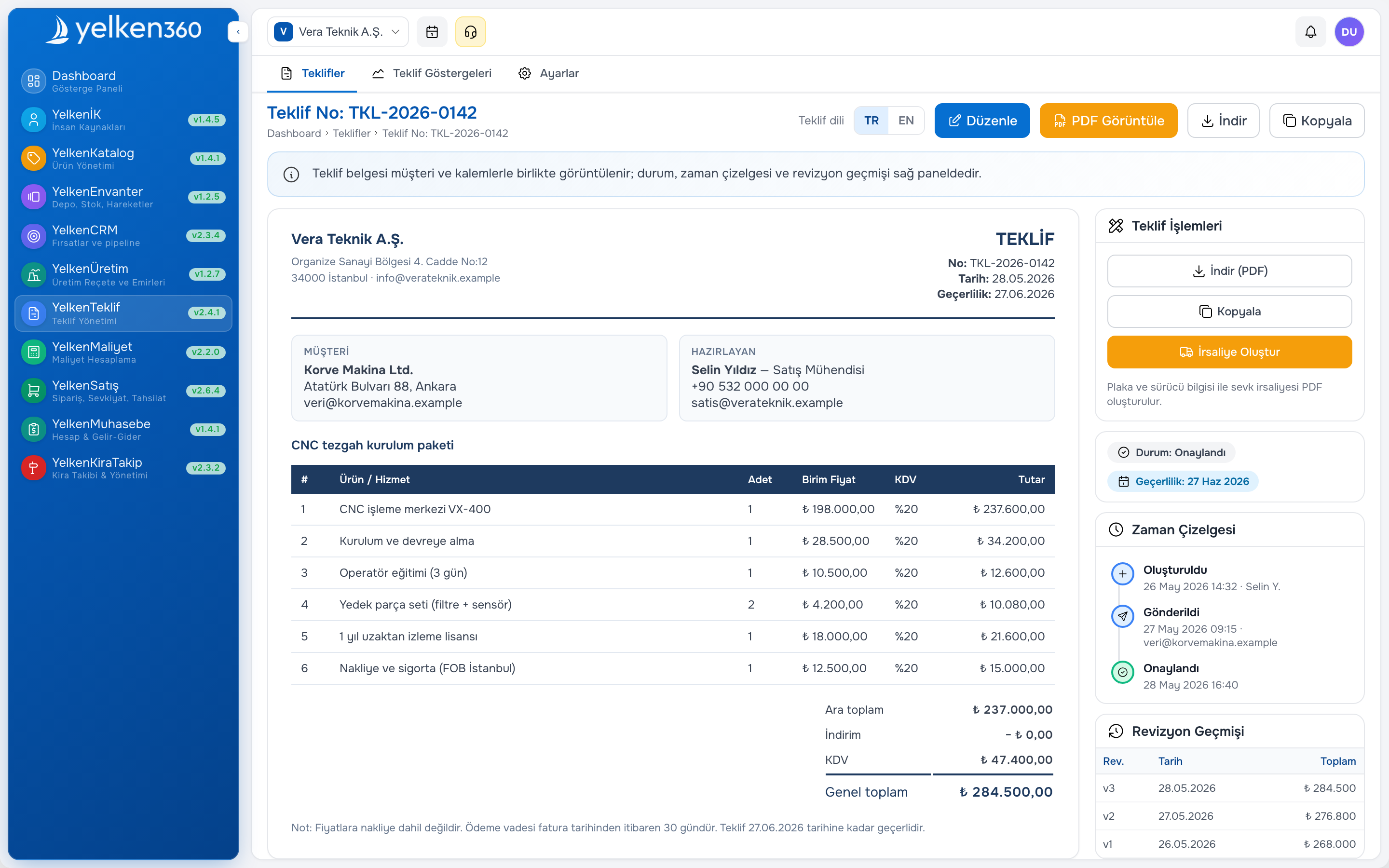
Rental quotes often use period factors (daily vs monthly) and return expectations on the same document as sales quotes. When rental lines live in the same workspace as standard product quotes, finance sees one customer balance and leadership compares hire vs sale margin fairly.
Returns must post stock or availability back to rentable pool—parallel spreadsheets for “units still out” break fleet planning. Link rental operations to CRM when renewals and extensions are sales-driven.
Two modules, one platform advantage
Costing and rental solve different motions but share needs: workspace permissions, product master, customer card, and audit trail. Buying a standalone rental app plus a standalone costing spreadsheet recreates integration tax.
Modular ERP lets a manufacturing workspace enable Yelken Cost while a sister workspace enabling hire runs Yelken Rent—same company account, different subscriptions, consistent user experience.
Rollout and governance
Costing rollout: top ten SKUs by revenue, agreed allocation rules, finance sign-off on standards, quote floor enforcement, quarterly refresh calendar. Rental rollout: asset catalog, rate tables, issue/return training, summary report review weekly, exception handling for damages.
Assign owners: product or operations for cost sheets, fleet manager for utilization, finance for published prices. Do not let every sales rep maintain private cost tabs.
Common mistakes
- Using last invoice price only while ignoring BOM quantity per parent
- Updating list prices without refreshing standard costs
- Rental billing from calendar notes without return posting
- Mixing tax and net on cost sheets used for margin floors
- Summary reports without line-level history when customers dispute charges
Where Yelken360 fits
Yelken360 offers dedicated packages for product cost calculation and rental operations with workspace-scoped data. Explore Yelken Cost and Yelken Rent on the modules page, compare pricing, and book a walkthrough via contact when you need costing floors, rental summaries, or both in one ERP account.
Frequently asked questions
Do we need full costing if we only distribute goods?
Many distributors start with purchase-based averages and margin floors on categories. Full calculation sheets matter when you assemble kits or private-label goods with volatile BOM inputs.
How often should standard costs refresh?
Quarterly for stable catalogs; monthly or event-driven when commodity inputs swing. Tie refresh to price list governance—not only year-end.
Can rental and sales share one customer record?
Yes—and they should. Split customer masters cause credit limit errors and duplicate statements.
What is the difference between summary and transaction rental reports?
Summaries show KPIs (outstanding, utilization). Transaction history proves each issue, return, rate, and adjustment for operations and audit.
Which module should we enable first?
Whichever pain is costing more margin today: wrong quote floors (costing) or unknown fleet utilization (rental). Stabilize catalog and customers before either.